Solid surface
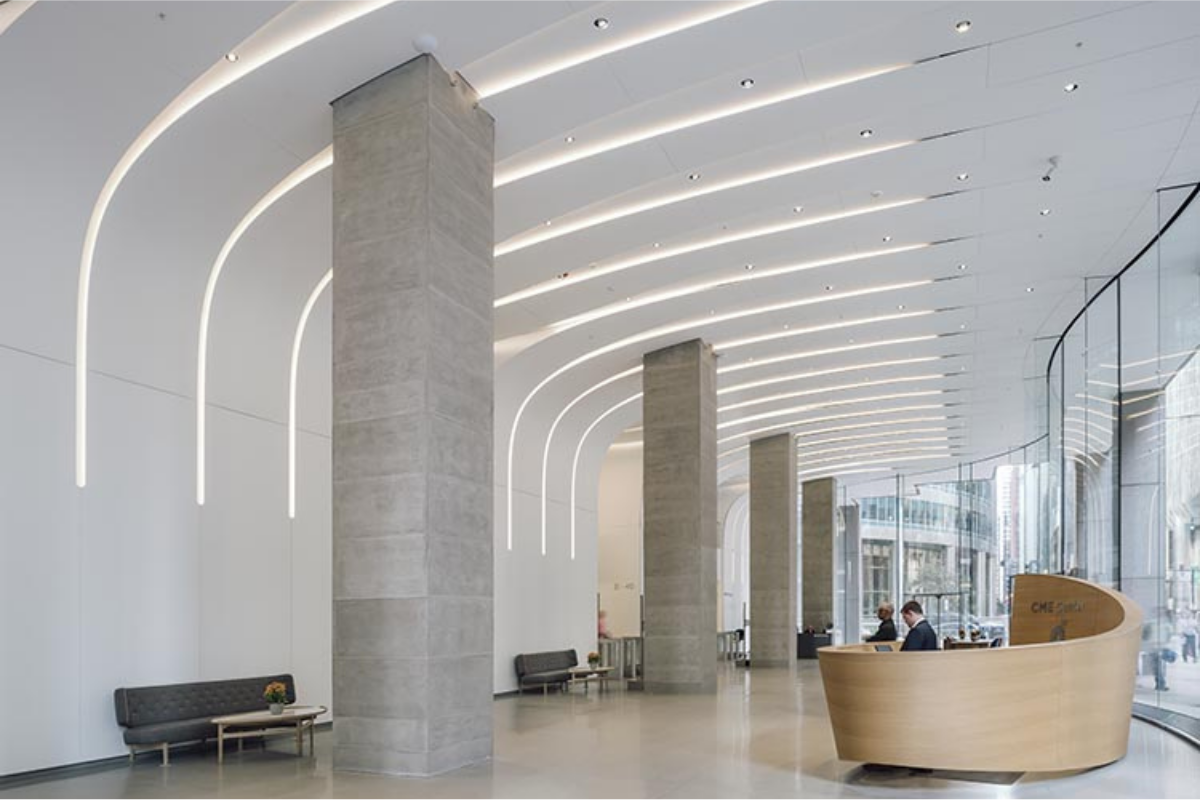
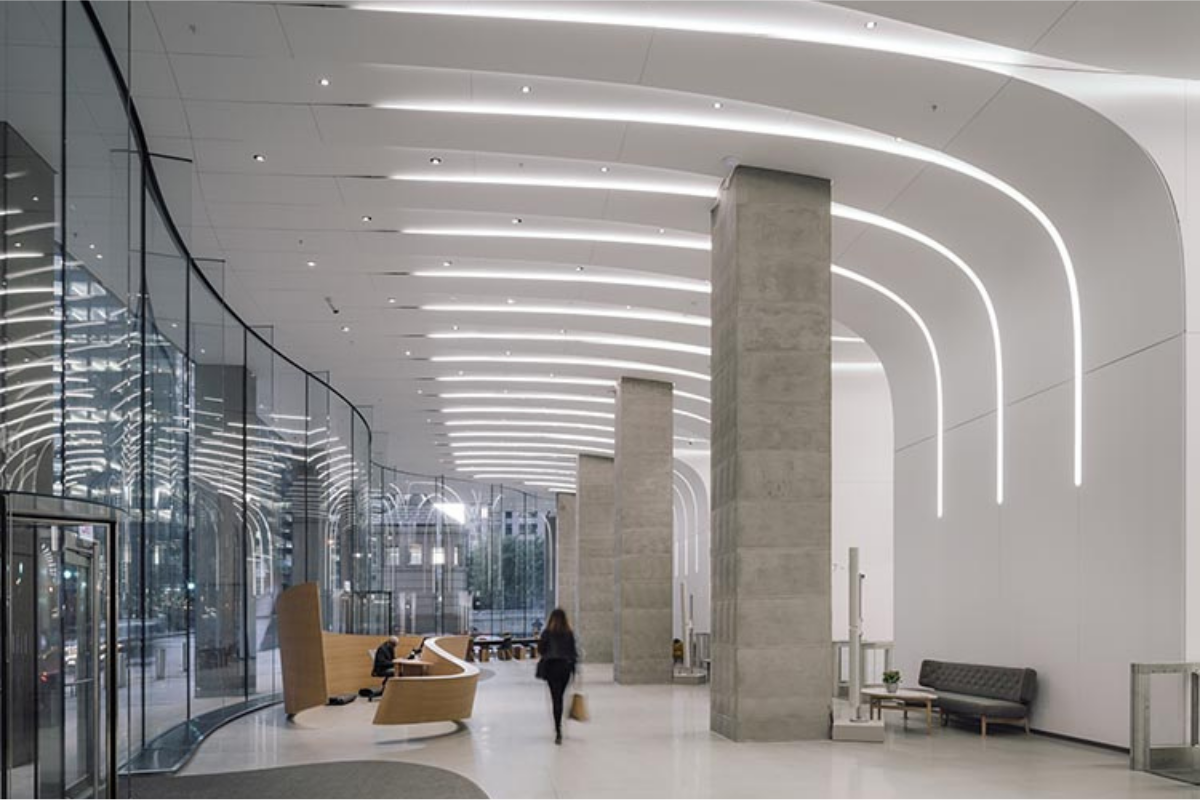
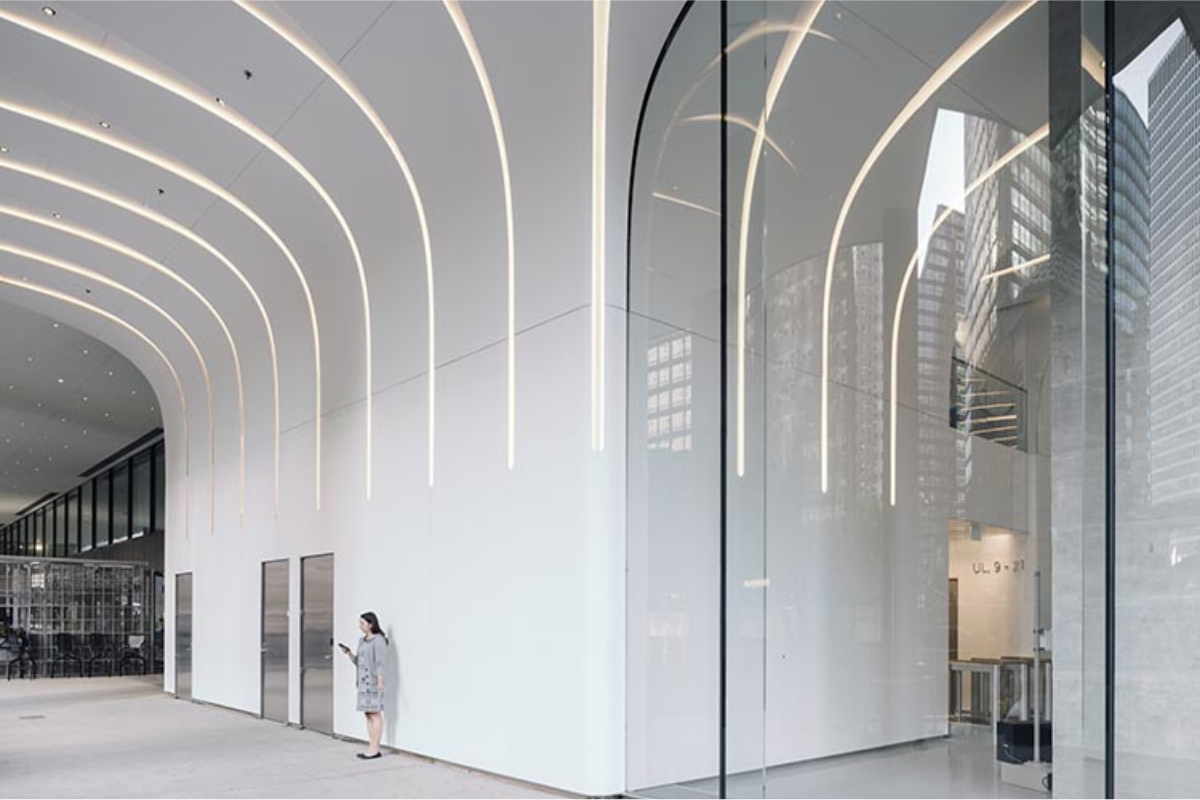
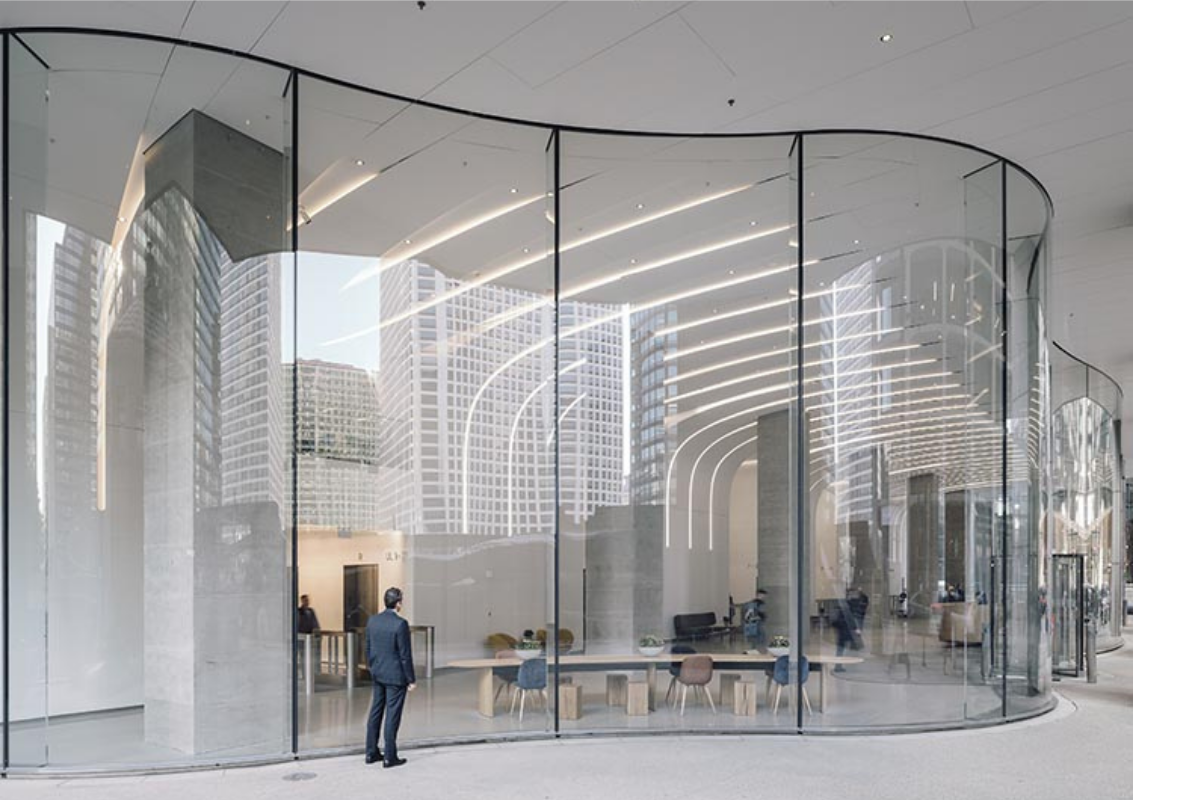
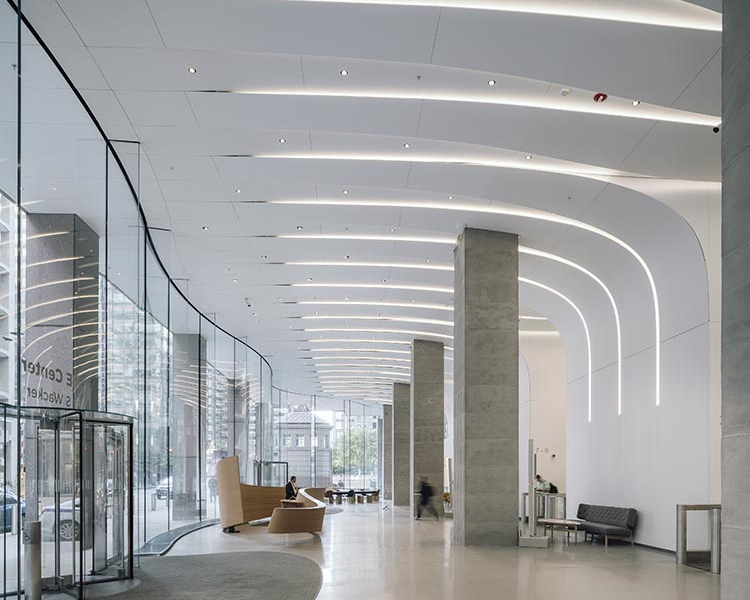
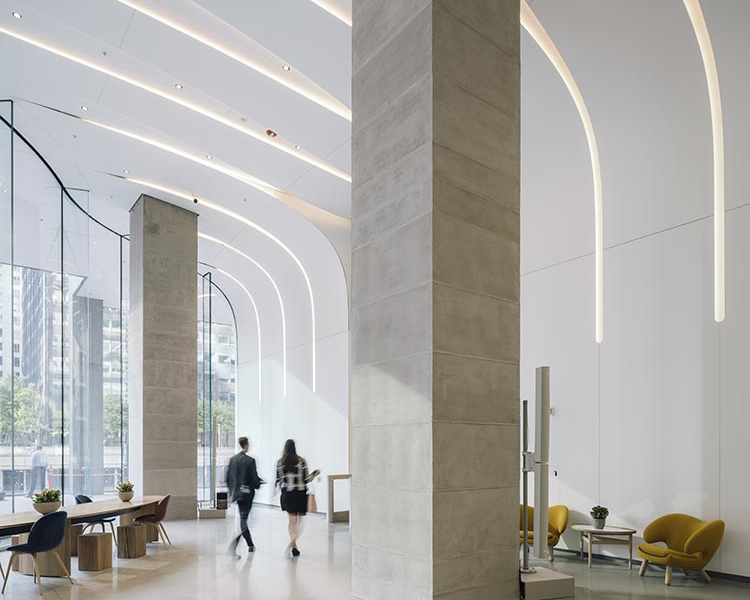
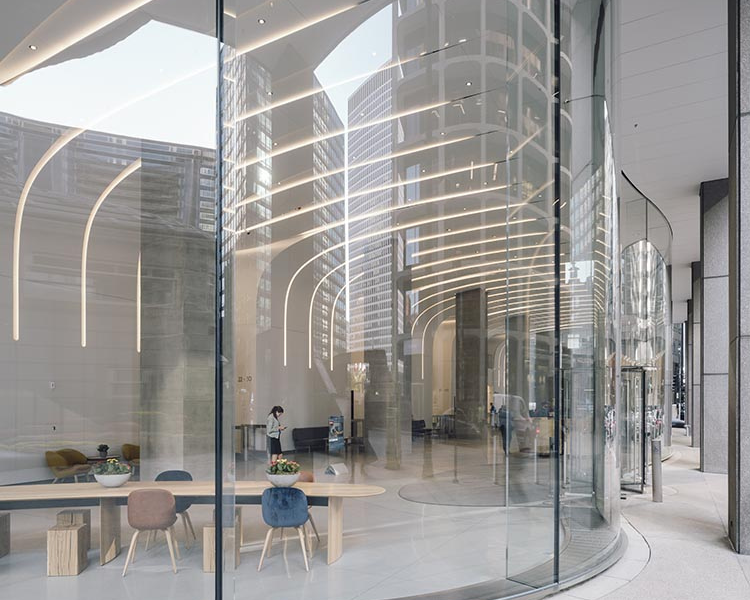
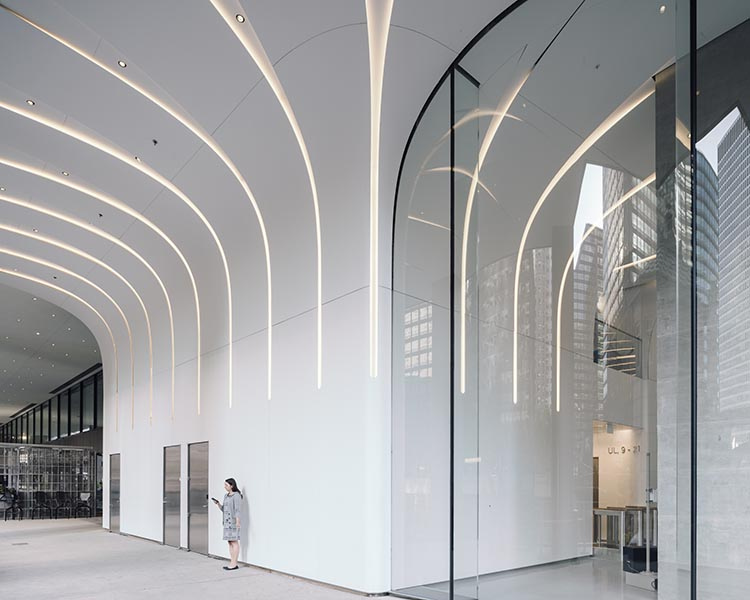
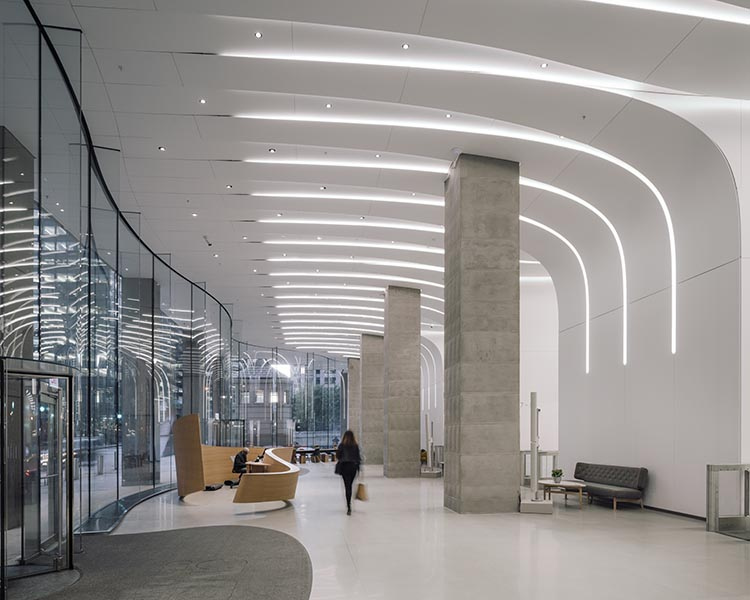
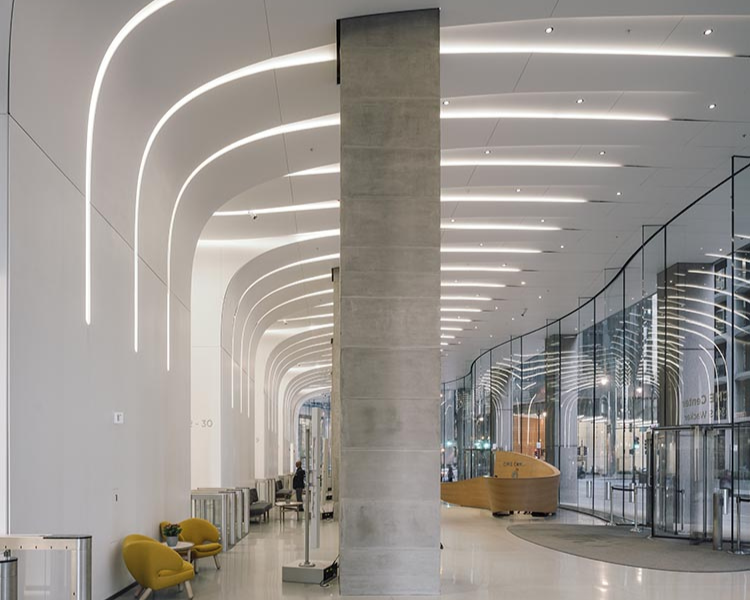
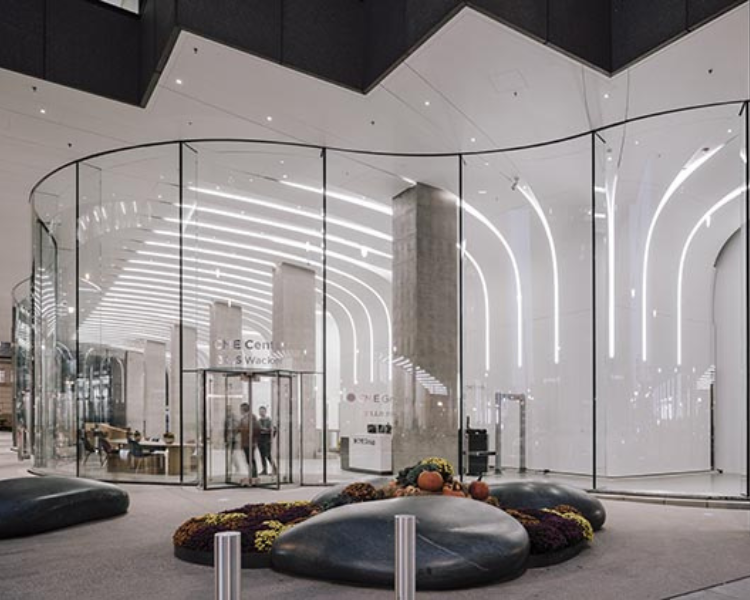
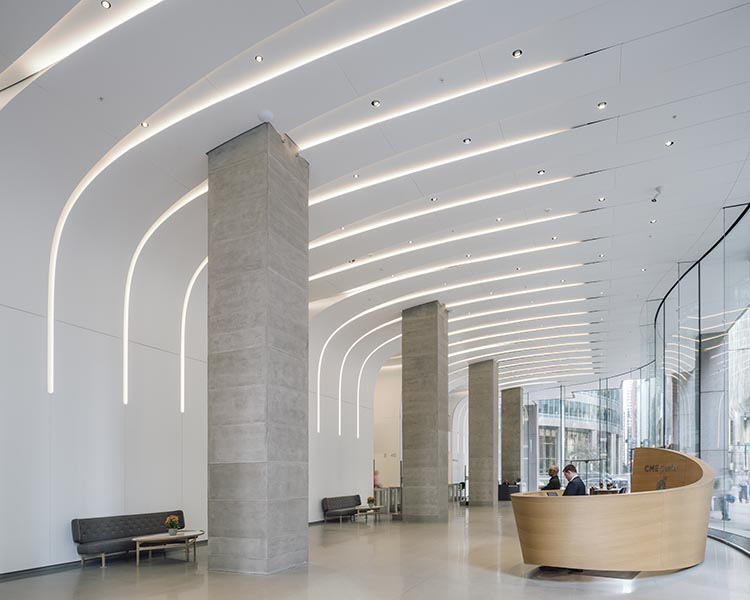
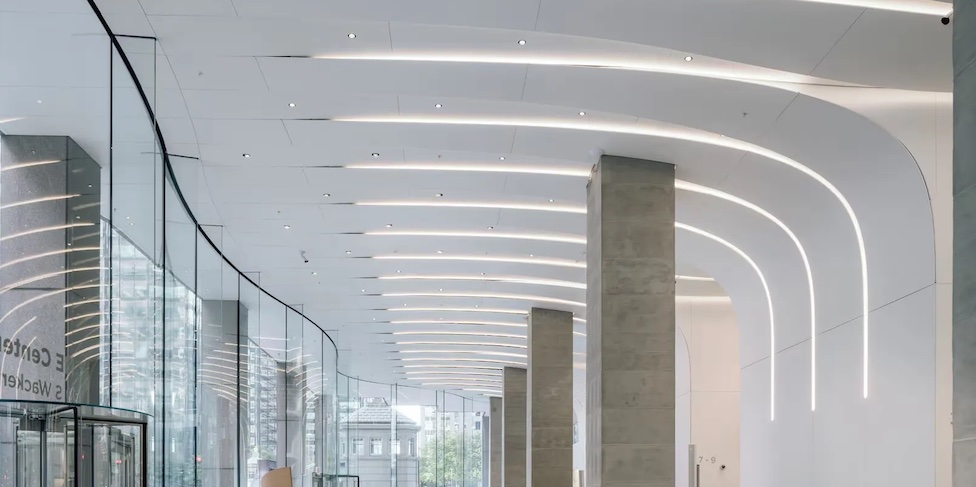
The renovation of the main lobby of the Chicago Mercantile Exchange — led by the firm Krueck + Sexton Architects and developed as a PORCELANOSA Grupo project through Butech — required a technical solution of the highest precision. To meet this challenge, Indutec Solid was responsible for transforming KRION® into large prefabricated modules capable of integrating seamlessly into the existing architecture, without the need for on-site adjustments. The result was a set of large-format elements, designed and validated through 3D scanning, enabling a clean, fast installation fully aligned with the architectural vision of the project.
The main challenge of the project lay in facilitating on-site installation in such a way that no additional finishing or sanding work would be required by the installer. It was essential that the modules arrived fully prefabricated and could be directly anchored to the building’s structure, with no need for final touch-ups.
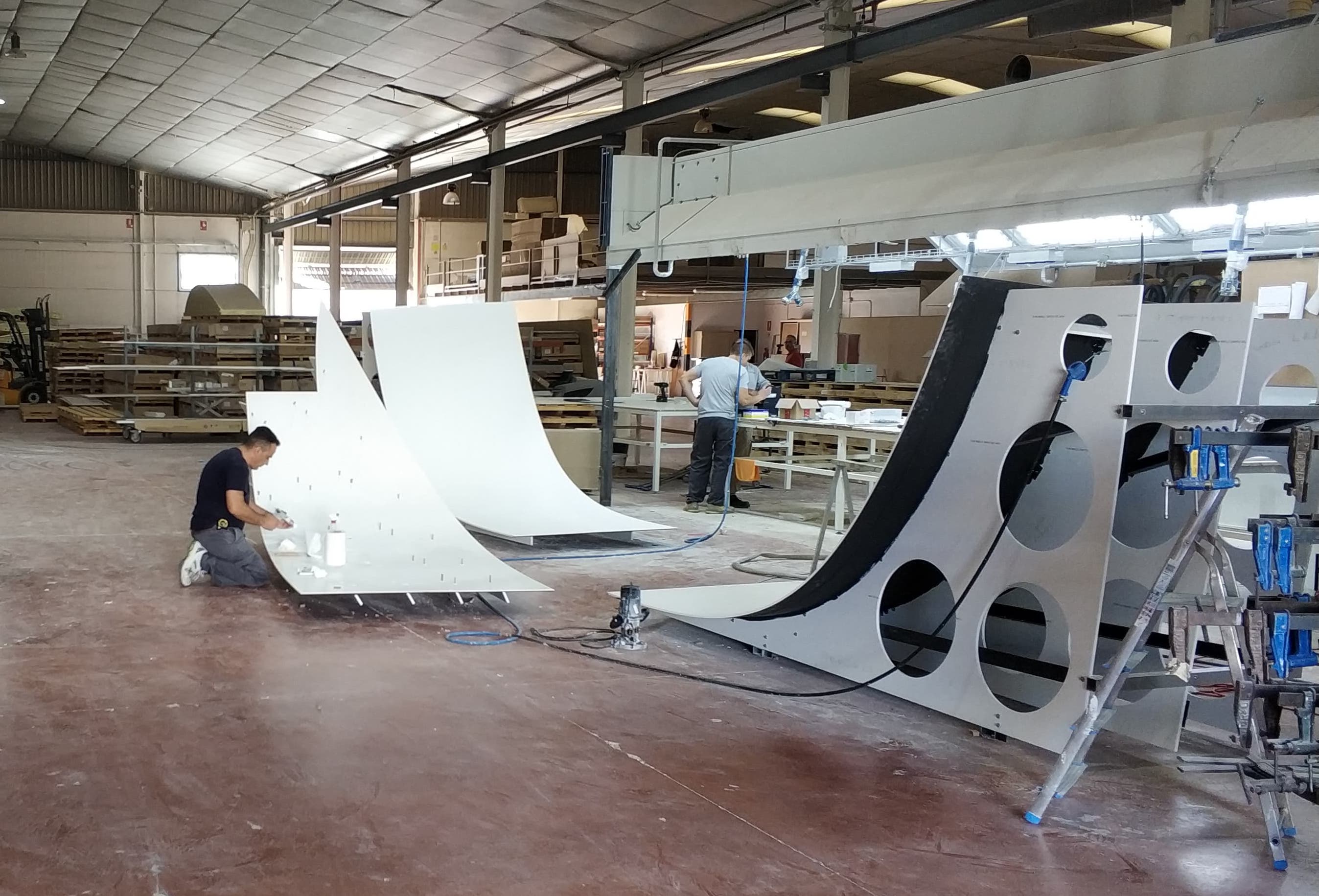
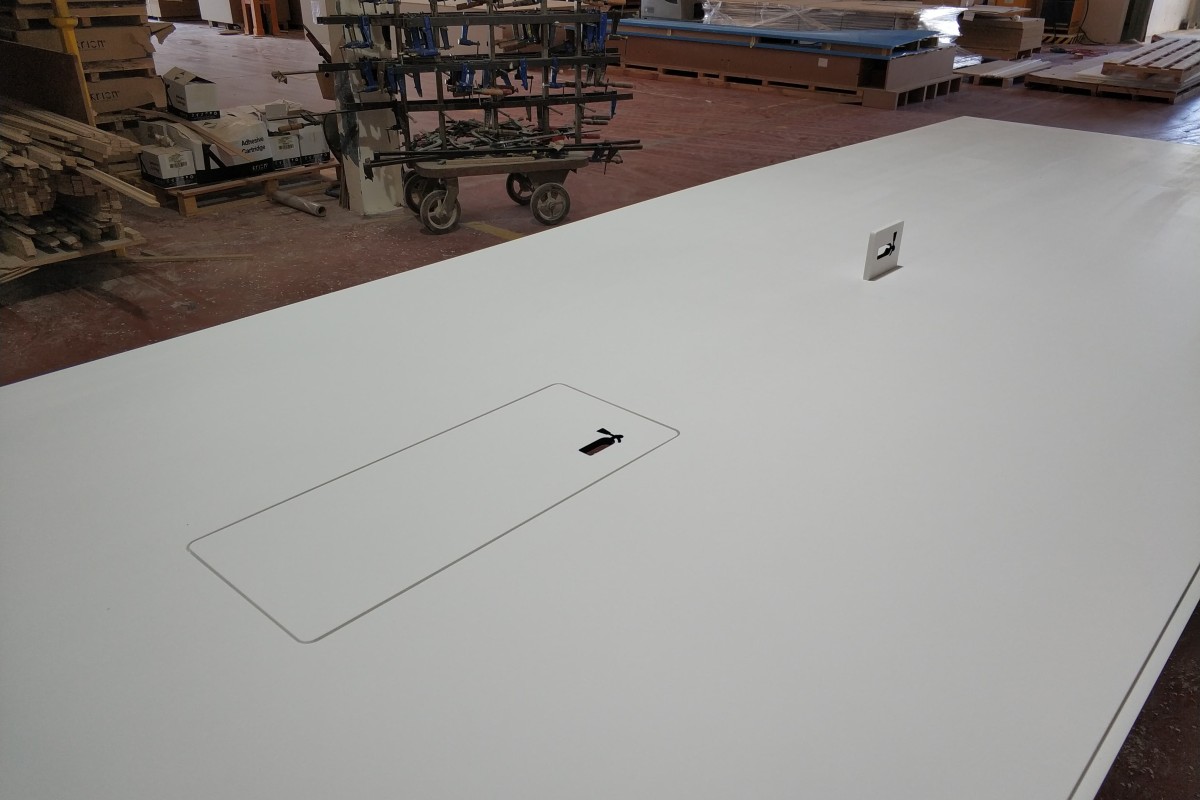
To achieve this, the modules had to be manufactured at the maximum possible dimensions, limited only by transport constraints — in this case, maritime shipping in containers — in order to reduce the number of units to be installed. In addition, the geometric complexity of the elements and their required fit made it essential to ensure dimensional accuracy, so that on-site tolerances were minimal and installation could proceed smoothly.
Furthermore, collaboration with the team of manufacturers and engineers (Krueck + Sexton Architects, Thornton Tomasetti engineering, and technical supervision by Butech for Porcelanosa Grupo) considered the use of KRION® Solid Surface as a continuous large-format interior–exterior cladding solution.
Collaborators
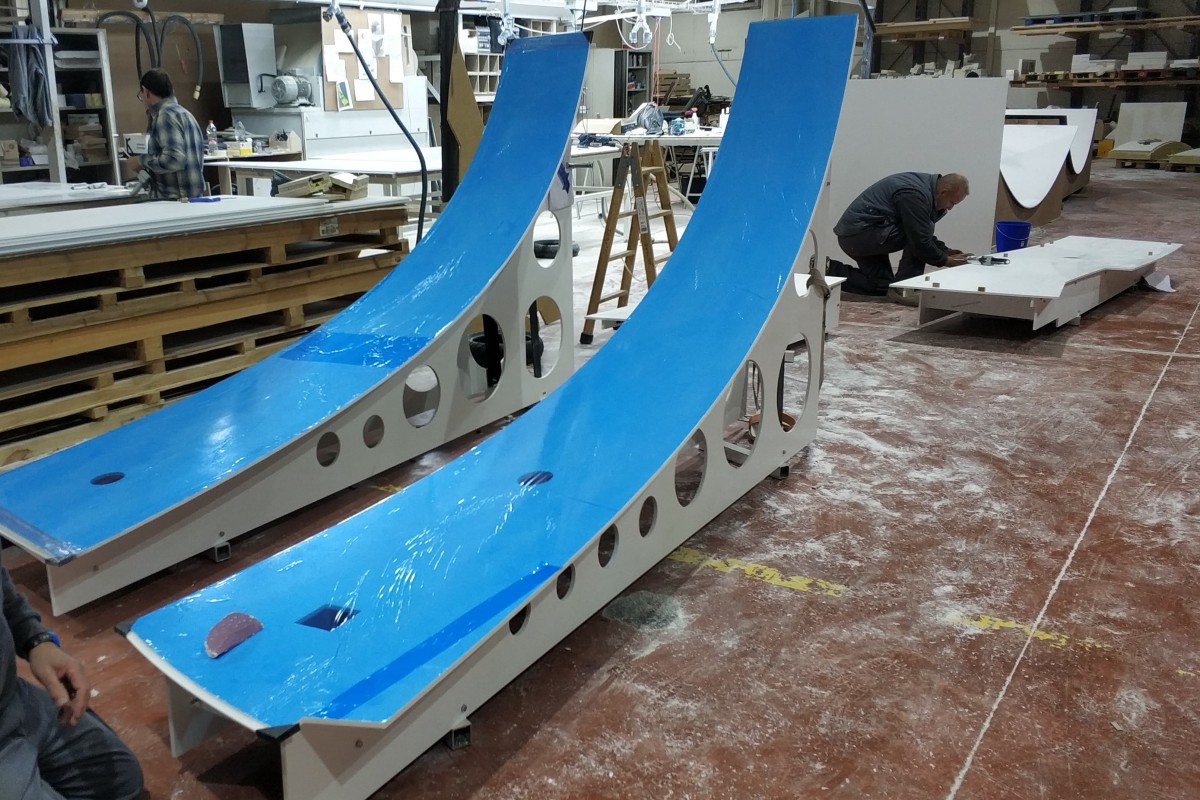
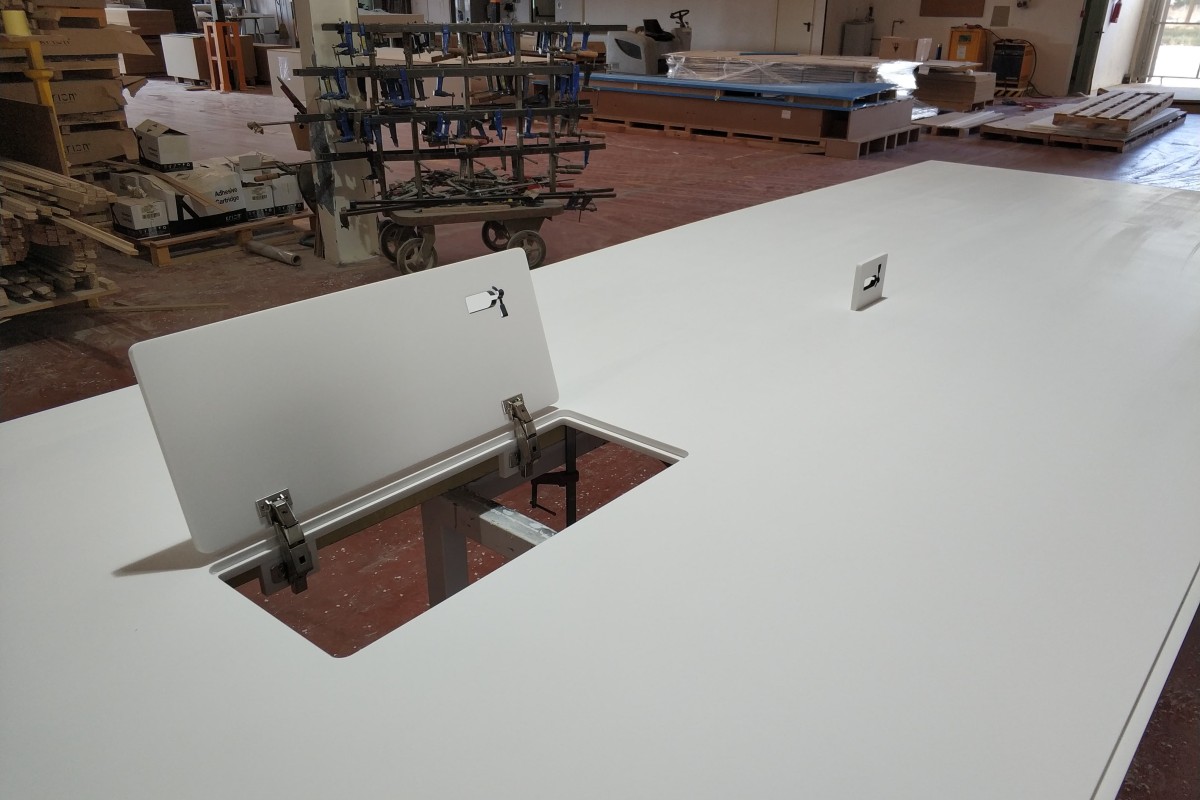
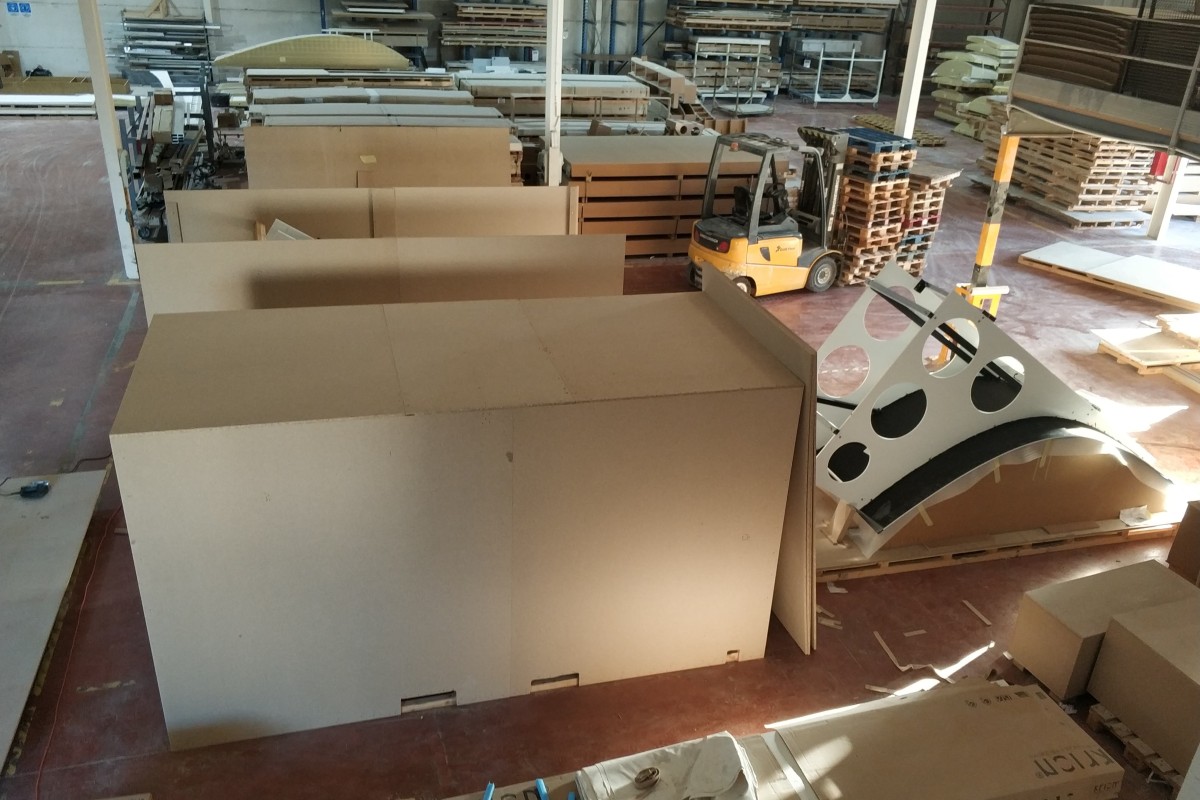
At Indutec Solid, we handled the transformation of KRION® material through a fully controlled in-plant process: CNC machining, thermoforming of curved components, and the manufacture of large-format modules designed to minimize the number of units to be transported and installed.
To ensure a flawless installation, and for the first time in this type of project, we carried out 3D scanning of each component prior to shipment. This made it possible to verify that all parts met the required tolerances, eliminating the need for potential on-site adjustments.
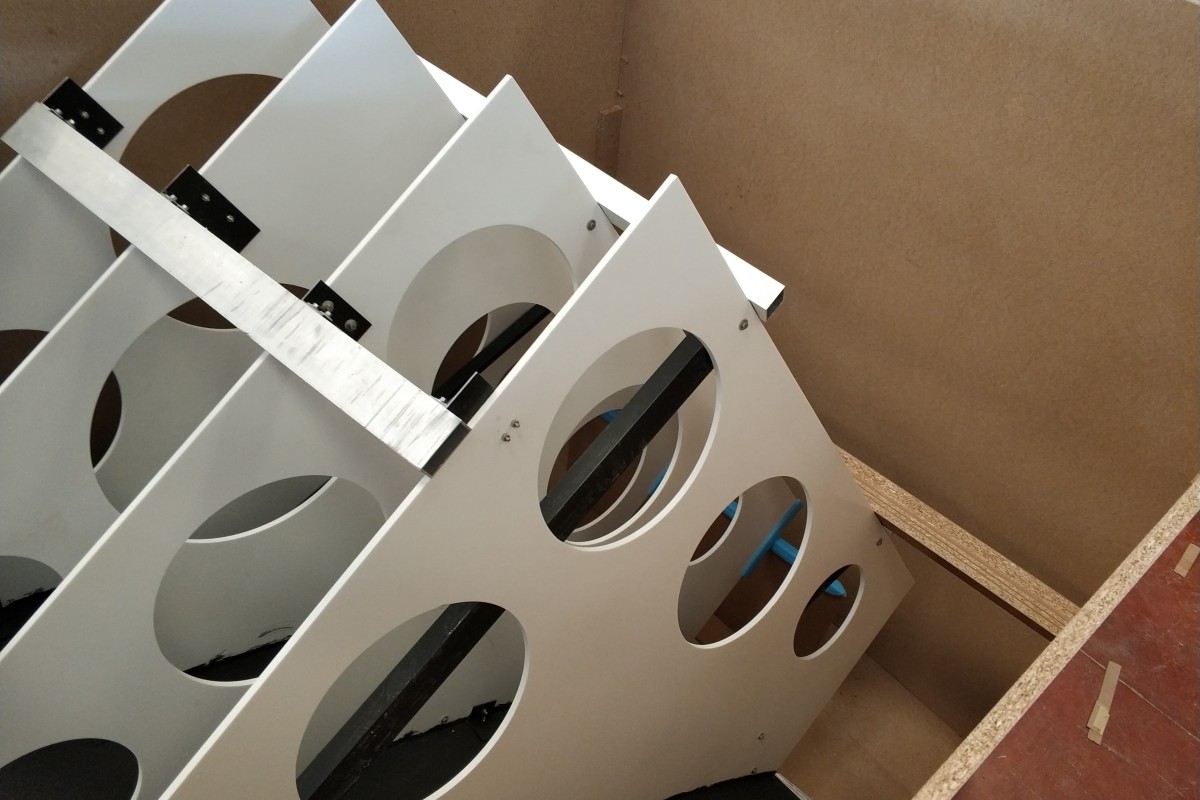
The modules were shipped in custom-built crates for maritime container transport, ensuring safe delivery to the site and direct positioning for installation. As a result, on-site work was limited to the mechanical anchoring of the modules to the existing structure, with no sanding, adjustments, or material touch-ups required.

The result
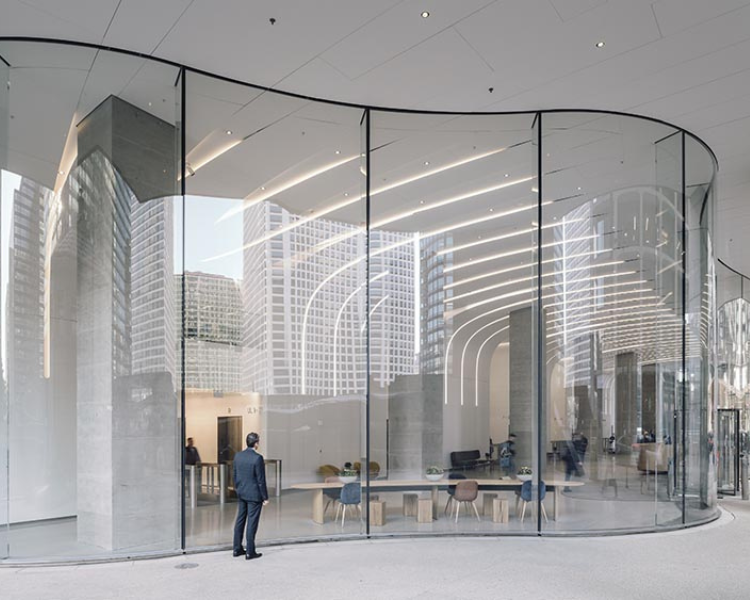
The result was a precise, fast, and high-quality intervention with strong aesthetic impact. The building’s lobby regained its urban prominence by integrating a continuous KRION® cladding that extends from the interior to the exterior, creating a new public gallery beneath the building. According to the project documentation, the intervention enabled the 2.5 million ft² property to significantly improve its positioning within Chicago’s Class A office market.
Thanks to our prefabricated solution, on-site installation was far more efficient, reducing installation time and the risk of on-site errors, while allowing the client to meet both quality and delivery objectives.
KRION® material proved its advantages: a non-porous surface, high impact resistance, easy maintenance, and the ability to create large-format elements and complex curved shapes.
Project gallery
PROJECTS